Miyetti Allah, and Late Buhari's ₦100 Billion “EMPOWERMENT”
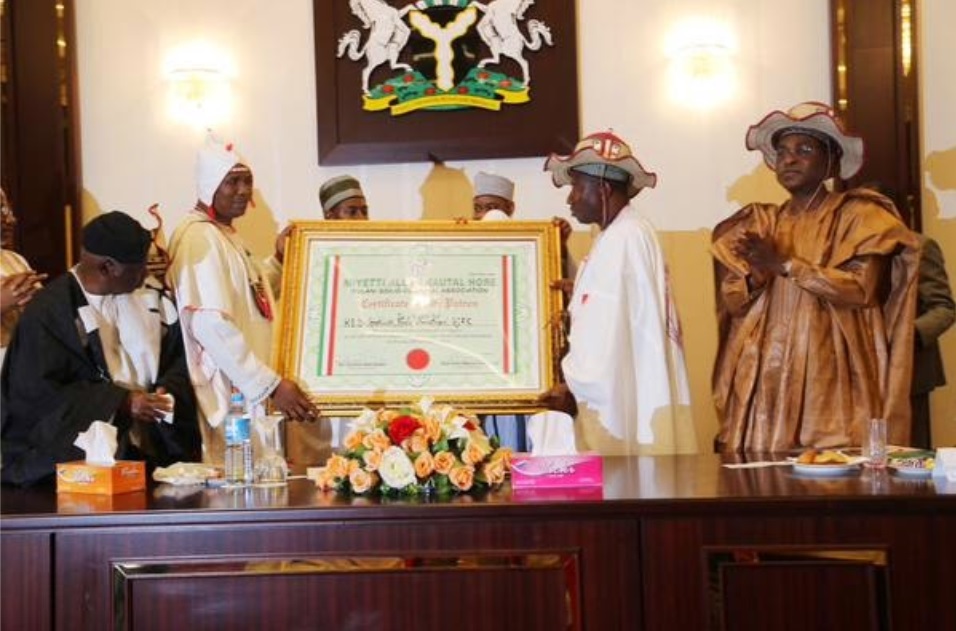
MIYETTI
ALLAH, AND LATE BUHARI’S ₦100 BILLION “EMPOWERMENT”: THE
AGENDA TOO DARK TO IGNORE
Nigeria
has recently been redesignated by the United States as a Country of
Particular Concern (CPC). Frankly, that label is generous. Nigeria is
a Country of Multiple Concerns—security, governance, justice, and
moral collapse layered on top of one another.
What
many Nigerians do not know, or prefer not to confront, is that this
designation reopened files long buried in diplomatic silence. In
Washington, attention has shifted sharply toward actors operating
beyond the Nigerian state—groups the Nigerian government shields,
excuses, or outright empowers.
Miyetti
Allah is one of them.
American
intelligence agencies are not guessing. They are not relying on
social media outrage. They are working with satellite data, financial
trails, arms movement patterns, and casualty statistics. That is why
Miyetti Allah has come under serious consideration as a terrorist
organization. That is also why discussions once extended—quietly
but firmly—to the ideological structure of the Sokoto Caliphate
itself.
This
is not conspiracy. This is intelligence.
In
Nigeria, the law is clear: no civilian is permitted to possess or
parade military-grade weapons like AK-47s. Yet Fulani herdsmen—widely
identified as the armed wing of Miyetti Allah—carry such weapons
openly, cross state lines freely, and massacre communities with
near-total impunity.
No
arrests.
No
prosecutions.
No
consequences.
Instead,
Nigerians are told to “understand.” We are asked to believe these
weapons are for “protecting cows.” An absurdity so insulting it
exposes the rot behind it.
Who,
then, is protecting farmers from armed herdsmen?
Who
is protecting villagers from night raids?
Who
is protecting commuters from kidnapping corridors?
It
took a U.S. Congressman, Riley M. Moore—not Nigerian leaders—to
ask the obvious question: how does a supposedly civilian group openly
bearing assault rifles not qualify as a security threat or a
terrorism enabler?
The
silence from Abuja was deafening.
Now
rewind to the Buhari years. Reports emerged—never transparently
denied—that Miyetti Allah was placated with ₦100 billion in
public funds under the guise of “empowerment.” Taxpayers’ money
handed to an organization already linked to widespread violence.
What
exactly was that money used for?
Livestock
feed?
Conflict
resolution?
Or
arms acquisition and territorial expansion?
No
audit.
No
accountability.
No
answers.
When
the RUGA project failed—rejected by southern communities who
refused to surrender ancestral lands—the strategy shifted. If land
could not be taken by policy, it would be taken by force. If
legitimacy failed, intimidation would succeed.
This
is not accidental violence. It is structured. It is financed. It is
protected.
And
it is ongoing.
Nigeria
is not haunted by random evil. It is being consumed by deliberate
choices—choices that elevate ethnic militias above citizens, reward
violence over law, and sacrifice national cohesion on the altar of
power preservation.
This
agenda is real. It did not die with Buhari. It has merely
adapted.
The
question is no longer whether Nigeria is under threat. The question
is whether Nigerians are ready to confront the system that is killing
them—slowly, selectively, and without remorse.
History
will not forgive silence.
And
the future will not survive denial.